Every crisis manager knows the moment: a decision has to be made, the clock is running, and everyone in the room is looking to the most senior person for a cue. Anthony Maras’s 2026 film Pressure (adapted from David Haig’s 2014 play) puts that moment under a microscope, and the result is one of the sharpest studies of decision-making under duress that crisis management professionals will find outside a textbook.
The 72 hours that decided D-Day
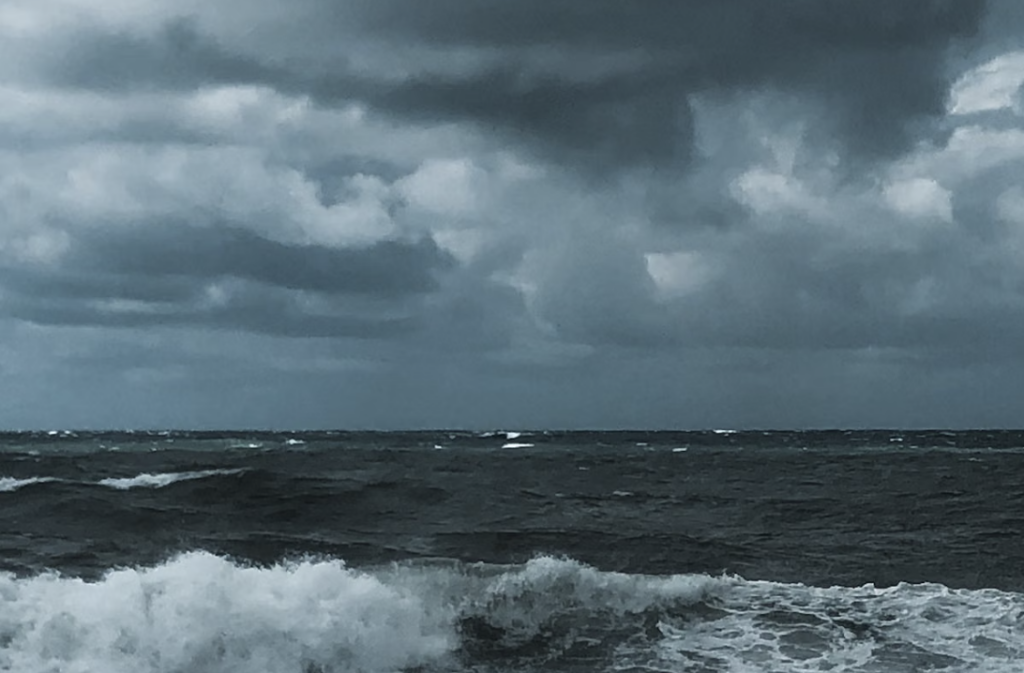
Pressure follows RAF Group Captain James Stagg (Andrew Scott), chief meteorologist to General Dwight D. Eisenhower (Brendan Fraser), across the three days before the planned June 5, 1944 invasion of Normandy. Stagg’s forecast conflicted sharply with that of his American counterpart, Irving Krick, who favoured traditional pattern-matching methods and predicted clear skies. Stagg, working from a more rigorous reading of an incoming Atlantic depression, warned that June 5 would bring gale-force winds, heavy seas, and cloud cover low enough to blind naval gunners and ground air support.
On June 4, Eisenhower sided with Stagg and postponed the invasion 24 hours. The storm hit exactly as Stagg predicted. A narrow weather window opened on June 6, and the invasion that followed changed the course of the war. The title works on two levels: the meteorological pressure system bearing down on the Channel, and the human pressure bearing down on the men forecasting it.
Where groupthink almost won
The film’s real tension isn’t the weather. It’s watching forecasters and staff officers calculate, consciously or not, what Eisenhower wants to hear rather than what the data says. Irving Janis, the psychologist who coined “groupthink” in 1972, described exactly this dynamic: groups under stress, facing a powerful and decisive leader, tend to suppress dissent, censor their own doubts, and manufacture an illusion of unanimity to avoid conflict at the worst possible moment. In Pressure, that pull toward appeasing Supreme Command is constant. Officers hedge. Consensus starts to harden around the answer that keeps the invasion on schedule, not the one the atmosphere is actually producing.
What makes the story valuable to crisis managers is that groupthink doesn’t win. Stagg keeps dissenting, repeatedly, to a five-star general holding the fate of 156,000 men in his hands. That took a specific kind of structural courage, and it’s worth naming what enabled it, because none of it was an accident.
Four lessons for crisis teams
Build in a mandate to dissent. Stagg wasn’t tolerated as a dissenting voice, he was Eisenhower’s officially designated chief forecaster, with the standing to override the consensus of the wider meteorological team. Crisis structures need a Stagg: someone whose job is explicitly to bring the unwelcome answer, and whose authority to do so doesn’t evaporate under pressure.
Separate the forecast from the decision. Eisenhower listened to competing technical views and then made the call himself; he didn’t ask meteorologists to vote or converge on a single, comfortable answer. Crisis leaders should resist the temptation to force early consensus among advisors. Disagreement, when it surfaces early is information. Disagreement suppressed early is risk that resurfaces later, usually at a worse moment.
Watch for self-censorship, not just loud dissent. Janis’s research found that groupthink rarely looks like open conflict. It looks like smart, well-meaning people quietly deciding not to raise a concern because the room’s mood has already settled. In a crisis, the most dangerous silence is the one nobody notices.
Reward the dissenter, even when they’re inconvenient. Stagg’s insistence delayed a $150-billion-dollar-in-today’s-terms military operation involving thousands of vessels and aircraft already in motion. That is enormous organisational pressure to fold. Crisis teams that punish, sideline, or quietly resent the person who keeps saying “not yet” are training their best safeguard to stop speaking up.
The uncomfortable irony
There’s a sting in the historical record worth sitting with: Eisenhower’s team very nearly got the call wrong for the opposite reason. Some accounts of the period note that had the group leaned toward consensus and gone with Krick’s more optimistic, crowd-pleasing forecast, the invasion could have sailed into the June 5 storm with catastrophic losses. The margin between triumph and disaster was one man’s willingness to keep disagreeing with the most powerful military commander in Europe, and one commander’s willingness to keep listening.
That’s the real lesson Pressure offers crisis management professionals. Groupthink isn’t a failure of intelligence or good intentions. Everyone in that Portsmouth briefing room was capable and dedicated. It’s a failure of structure, one that lets social pressure quietly override evidence. The fix isn’t finding smarter people. It’s building teams and hierarchies where the smartest, most inconvenient answer still has somewhere to go.