
Can AI help build effective crisis exercises?
Well-designed crisis exercises help teams build confidence, test decision-making, and expose gaps before a real incident occurs. But creating a realistic, relevant and engaging exercise can be time-consuming. Scenarios need to feel plausible. Injects must unfold at the right pace. Roles, communications, objectives and evaluation points all need careful thought. This is where AI can become a valuable support tool for exercise designers and resilience teams.
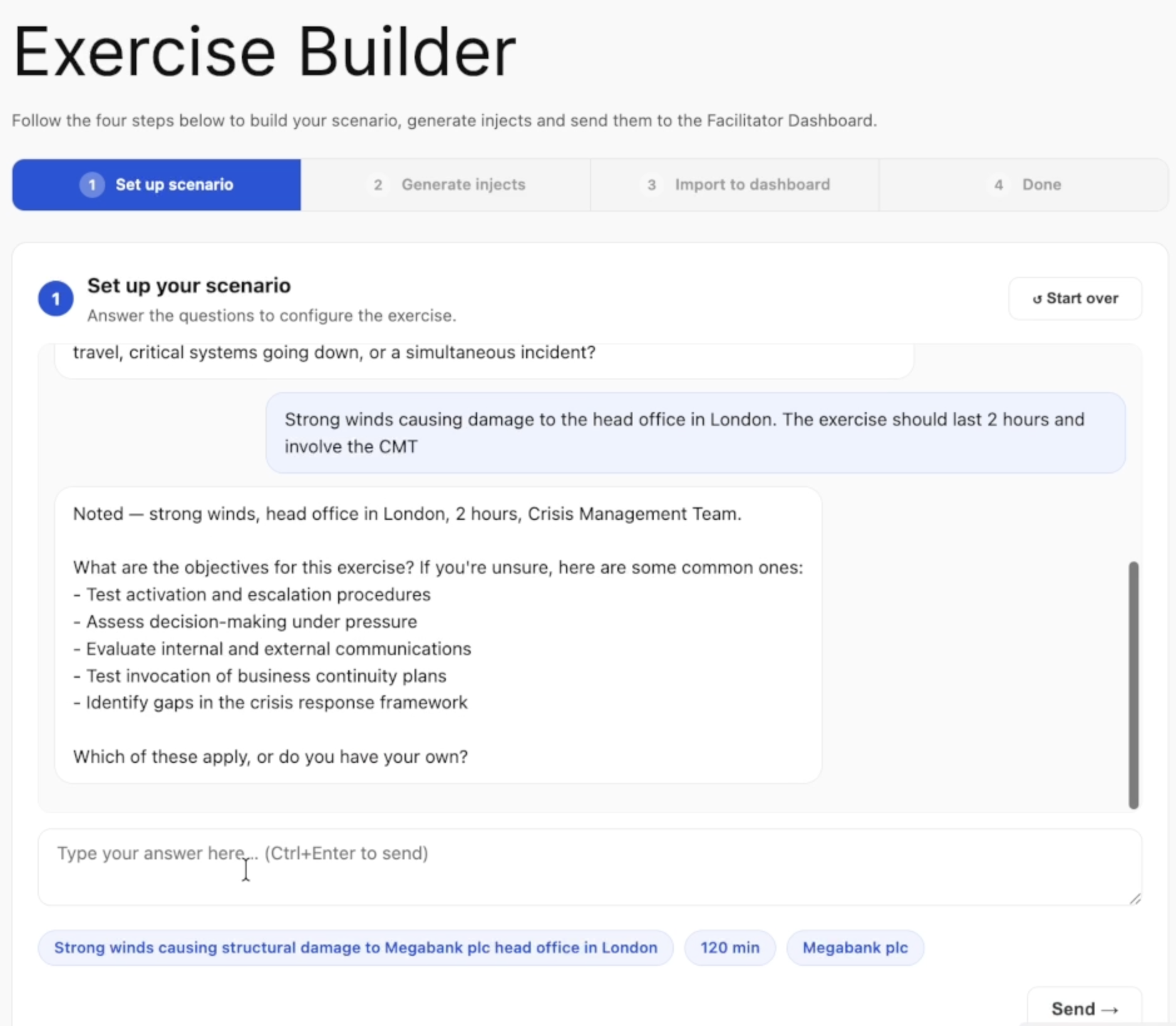
AI can help turn a broad risk theme into a structured exercise quickly. A team might start with a simple idea such as a cyber attack, supply chain disruption, severe weather event, data breach or reputational crisis. AI can then help develop a scenario narrative, suggest escalating events, create injects, draft media statements, prepare stakeholder questions and identify decision points for participants. This allows exercise planners to move from a blank page to a workable draft much faster.
AI is also useful for tailoring exercises to different audiences. A board-level exercise may focus on strategic choices, communications and accountability. An operational team may need detailed prompts around coordination, resource allocation and escalation. AI can help adapt the same core scenario for different levels of the organisation, making exercises more relevant and practical.
Another strength is variety. Crisis exercises can sometimes become predictable, especially when teams rely on similar formats each year. AI can introduce fresh angles, unexpected complications and alternative scenario paths. This supports more dynamic exercising and helps participants practise flexible thinking rather than rehearsing a fixed script.
However, AI should not replace professional judgement. Crisis exercises still need human oversight, sector knowledge and careful facilitation. The best results come when AI is used to accelerate design, challenge assumptions and generate options, while experienced practitioners refine the content and ensure it aligns with the organisation’s risks, plans and culture.
Platforms such as crisis-cloud.ai can help bring these benefits into a structured environment. By combining AI-supported scenario development with practical crisis management workflows, organisations can create more frequent, realistic and targeted exercises without starting from scratch every time.
Used well, AI does not make crisis exercising less human. It gives teams more time to focus on what matters most: learning, improving and preparing people to respond effectively when pressure is at its highest.